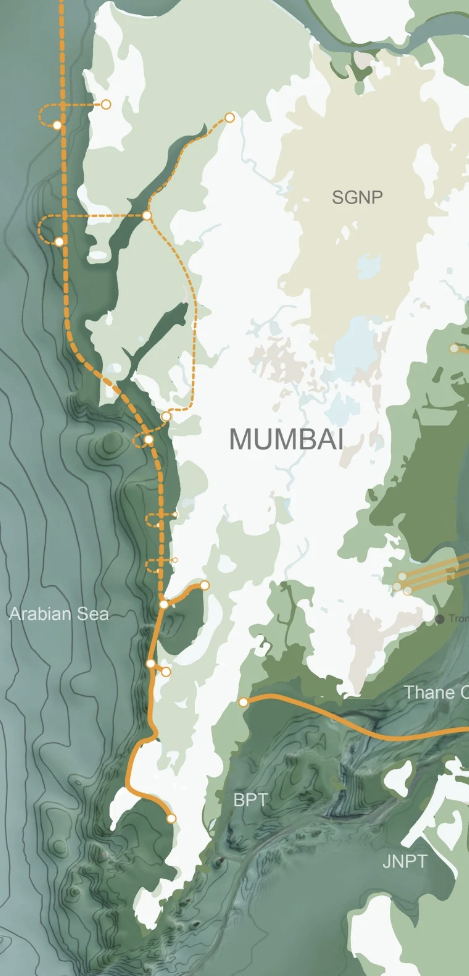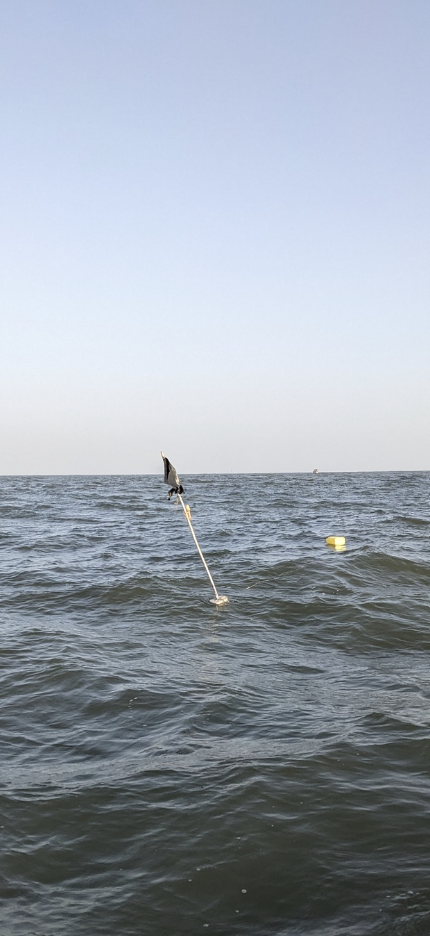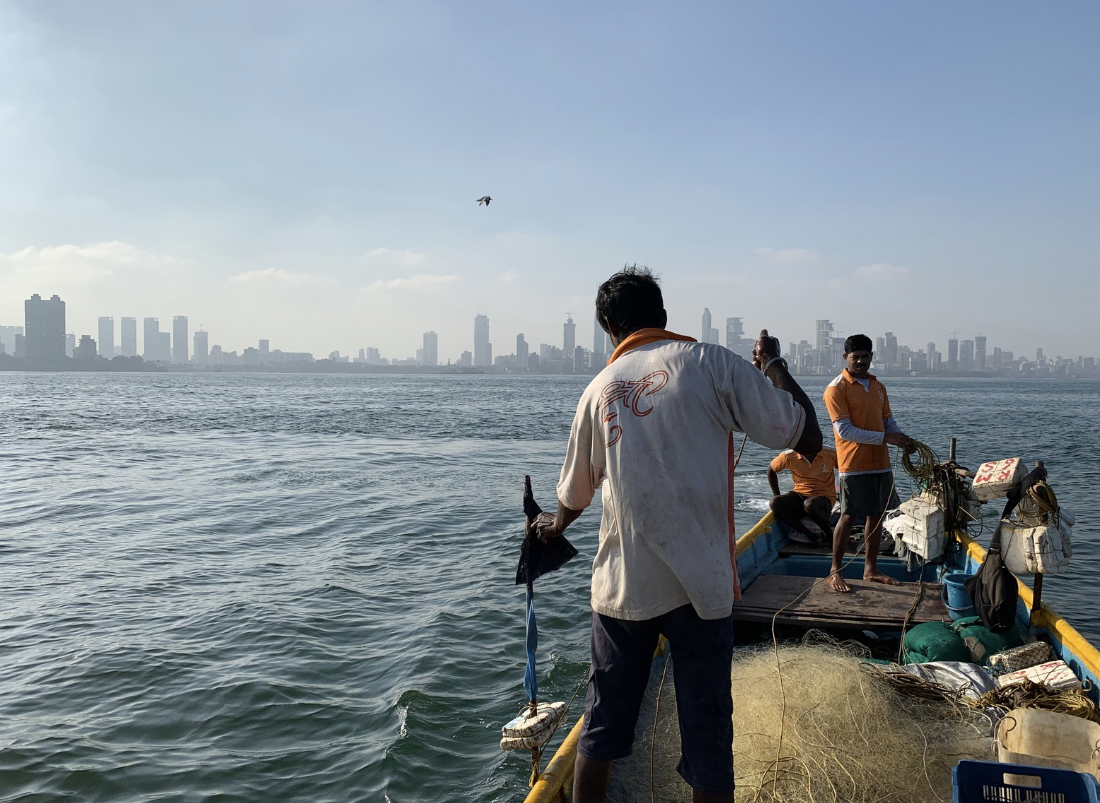
Fishing locations (Saj Plots) near the coast are fixed from family to family. They are marked by coloured flag or floating buoys. These plots are used during certains times of the year.
Often the decision whether to cast a net at the Saj or in the open sea (commons) is determined by a variety of factors, some of which have been listed here.
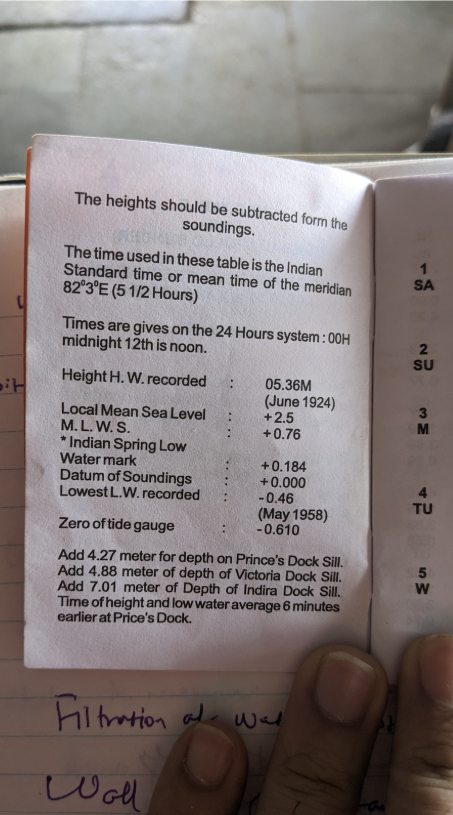
The tide calendar is perhaps one of the most important factors in navigation and fishing. The ideal time for casting nets is when just before one tide ends and to pull it when another one begins in full force.
Fishers go from point to point casting their nets and then they wait. They pull their nets before the tide obtains full force. '
Any later and there is a risk of fish escaping or the net snapping due to the force exerted by the water.
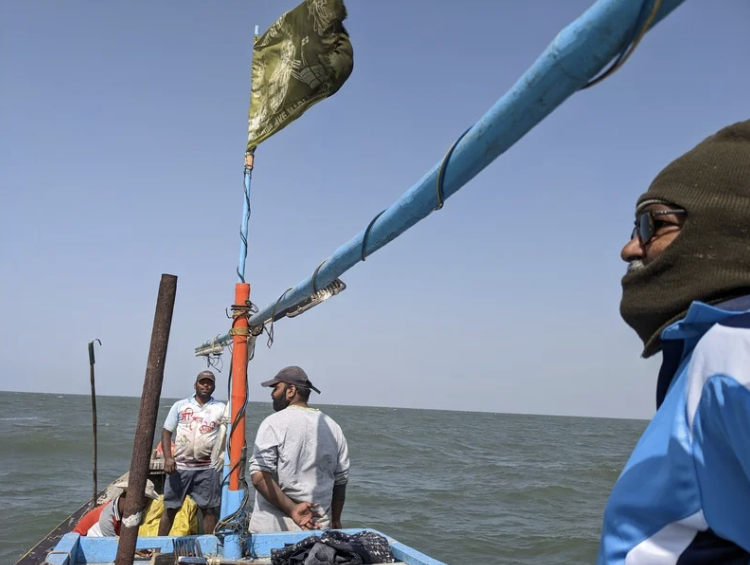


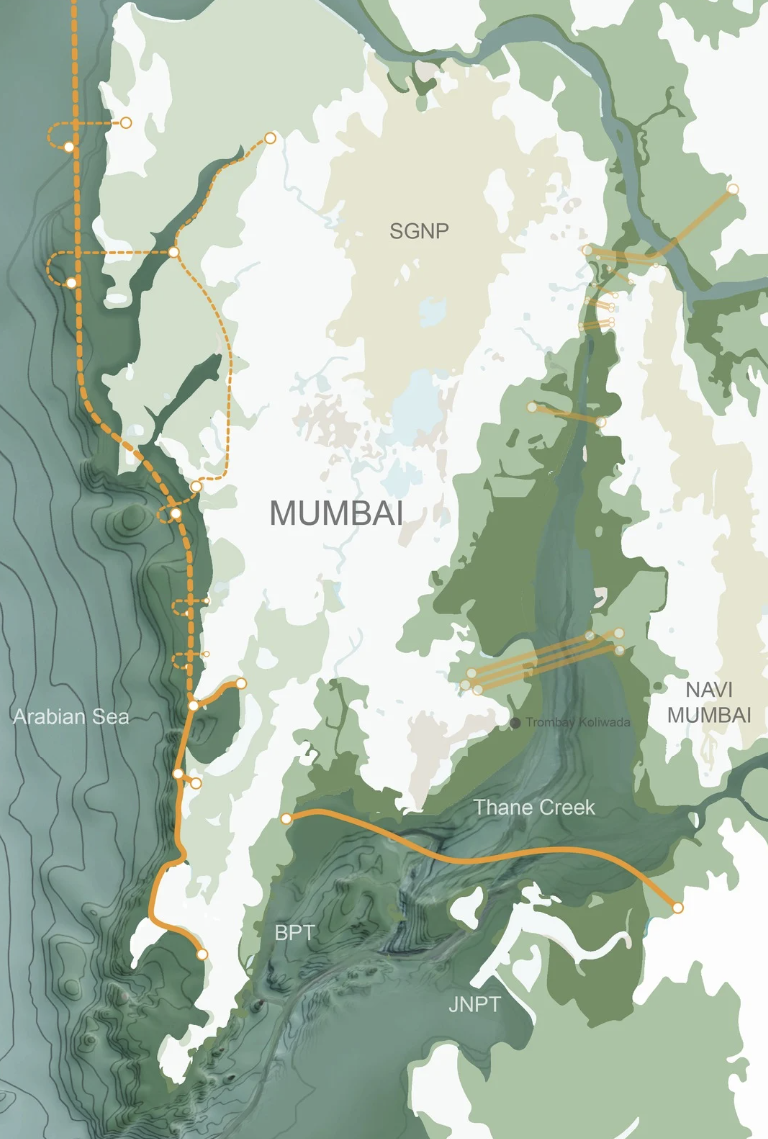
Locating oneself in the ocean is as much a function of where you are in he water, as it is of where you are in relation to the land.
Navigation uses landmarks/buildings/infrastructural projects as ways of understanding location and moving towards fishing points.
Fishers orient their location in the sea based on where they are in relation to important landmarks in the city.
As the city changes, so do the landmarks used by fishers to understand where they are. The sealink, the large buildings, the sewage outflow point in the middle of the sea, all become landmarks to locate and orient themselves
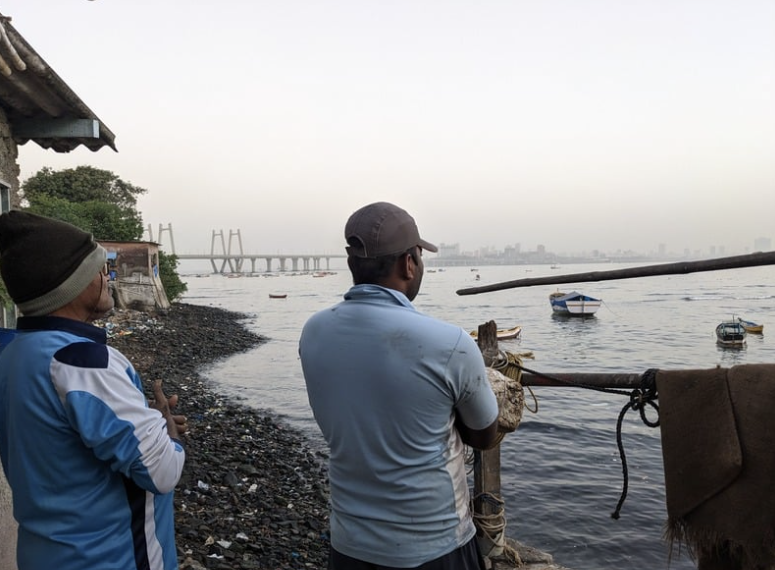
Fishing locations (Saj Plots) near the coast are fixed from family to family. They are marked by coloured flag or floating buoys. These plots are used during certains times of the year.
Often the decision whether to cast a net at the Saj or in the open sea (commons) is determined by a variety of factors, some of which have been listed here.